You just got the estimate. The plumber wants to rip up your front yard, tear out the driveway, and dig a long trench through the landscaping you spent years building. The sewer repair is one thing. The restoration cost is what really makes your stomach drop.
According to the American Society of Civil Engineers, the United States’ wastewater infrastructure earned a D+, with sewer line failures rising sharply as older sewer pipes age. The good news is that traditional digging is no longer the only option. Trenchless pipe repair addresses these issues with minimal surface disruption.
In this post, we cover:
- What trenchless pipe repair is and how it works
- The common sewer line problems that trenchless technology addresses
- How pipe lining and pipe bursting compare
- The advantages of trenchless sewer repair over traditional excavation
- When trenchless is the right solution and when it isn’t
What Is Trenchless Pipe Repair?

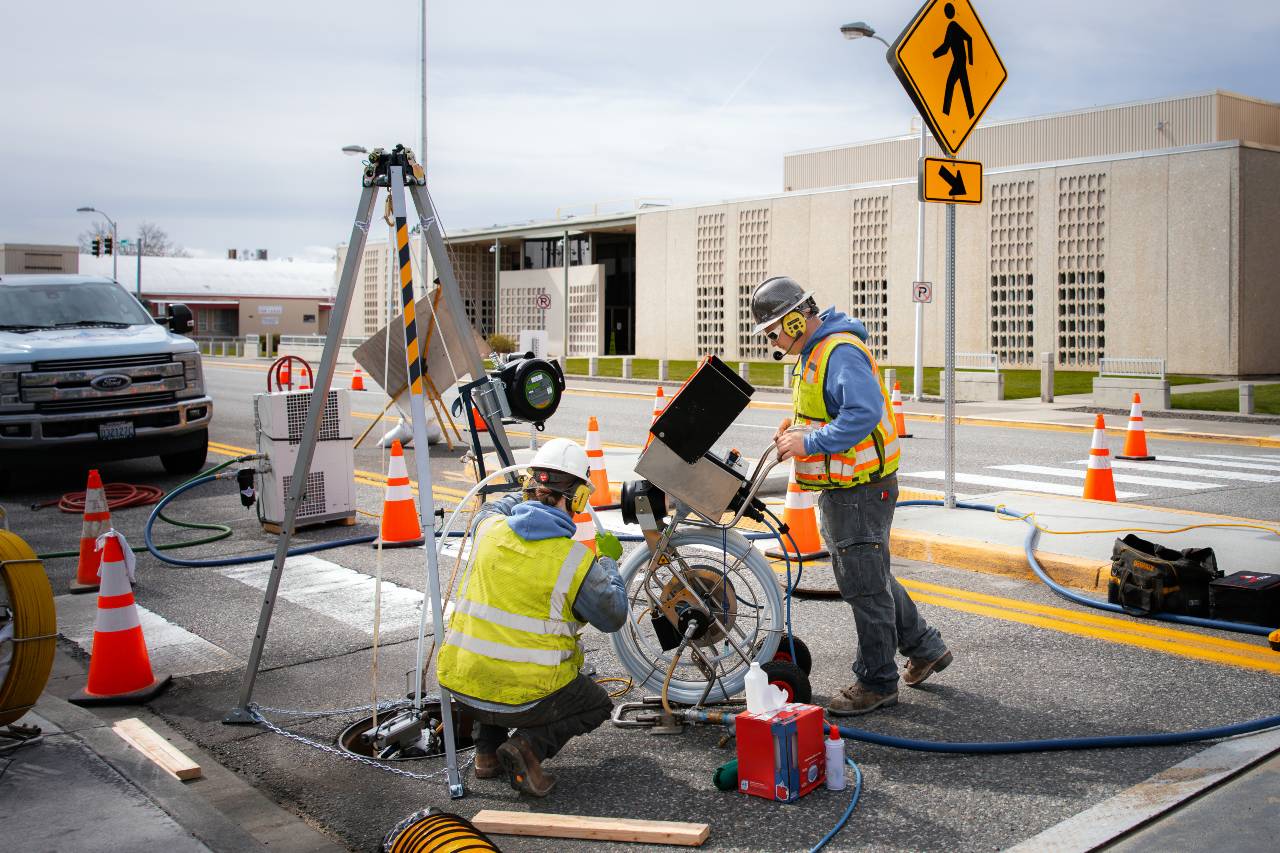
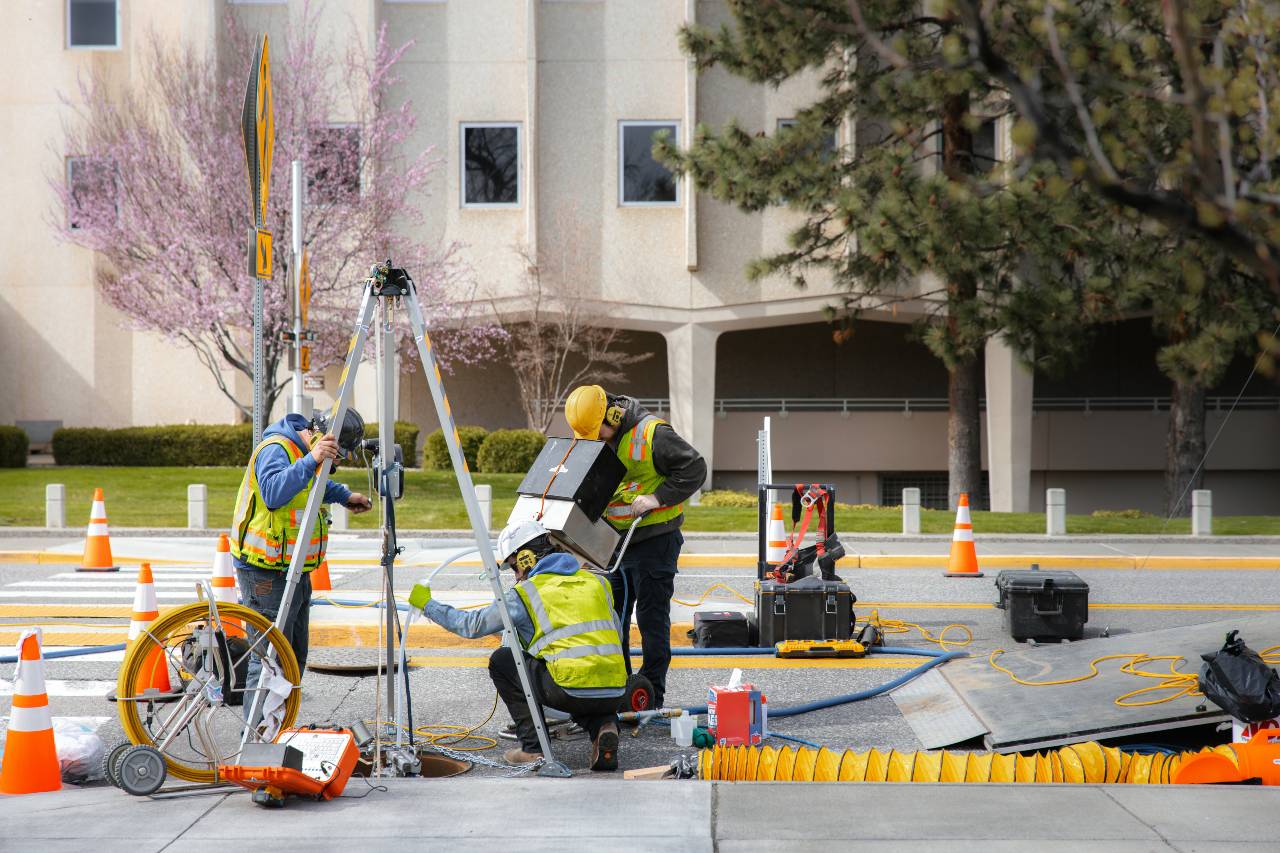
Trenchless pipe repair is a modern approach to fixing damaged sewer pipes without long trenches across your property. Zero-dig trenchless pipe repair uses small access points to reach the damaged pipe and restore it from the inside or replace it from end to end.
Trenchless sewer line repair relies on two primary methods:
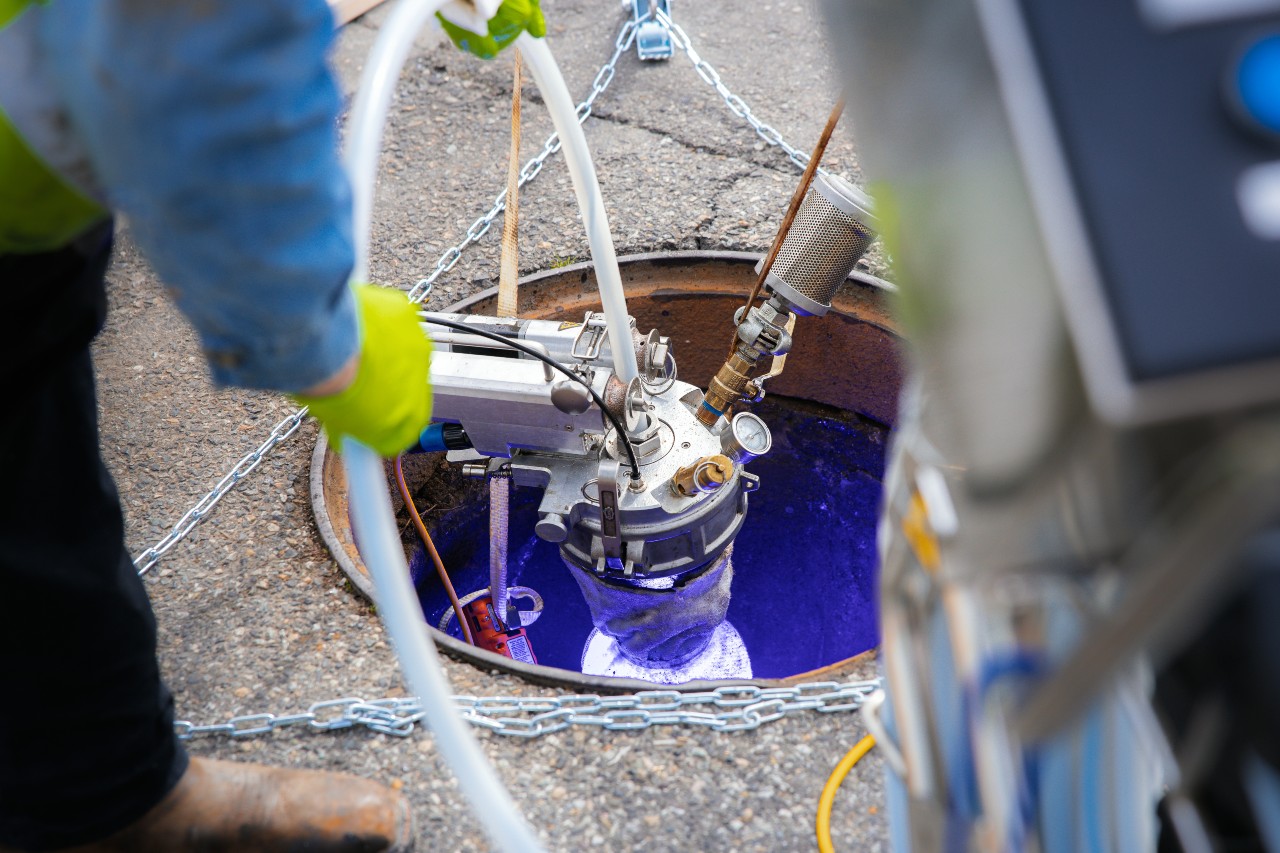
- Pipe lining (CIPP). A resin-saturated liner is inserted through the existing pipe and cured in place using hot water, steam, or UV light, creating a seamless new pipe inside the old one.
- Pipe bursting. A conical bursting head is pulled through the damaged pipe, fracturing the old pipe outward into the surrounding soil and pulling a new HDPE (High-Density Polyethylene) pipe into place behind it.
Advances in camera inspection, hydraulic equipment, and resin technology have made it possible to handle sewer line repair work that once required extensive digging in a fraction of the time.
The result is a permanent fix that protects the line’s structural integrity without destroying the yard, driveway, or hardscaping above.
Common Sewer Issues Trenchless Technology Addresses
Trenchless sewer repair handles nearly every type of sewer line damage homeowners face, from slow drains caused by minor obstructions to a completely collapsed main sewer line. The right trenchless repair method depends on the condition of the existing pipe and the extent of the damage.
According to the USDA Forest Service, tree roots cause more than 50% of all sewer system blockages, making them the leading source of sewer line problems for homeowners with mature landscaping.
1. Tree Root Intrusion
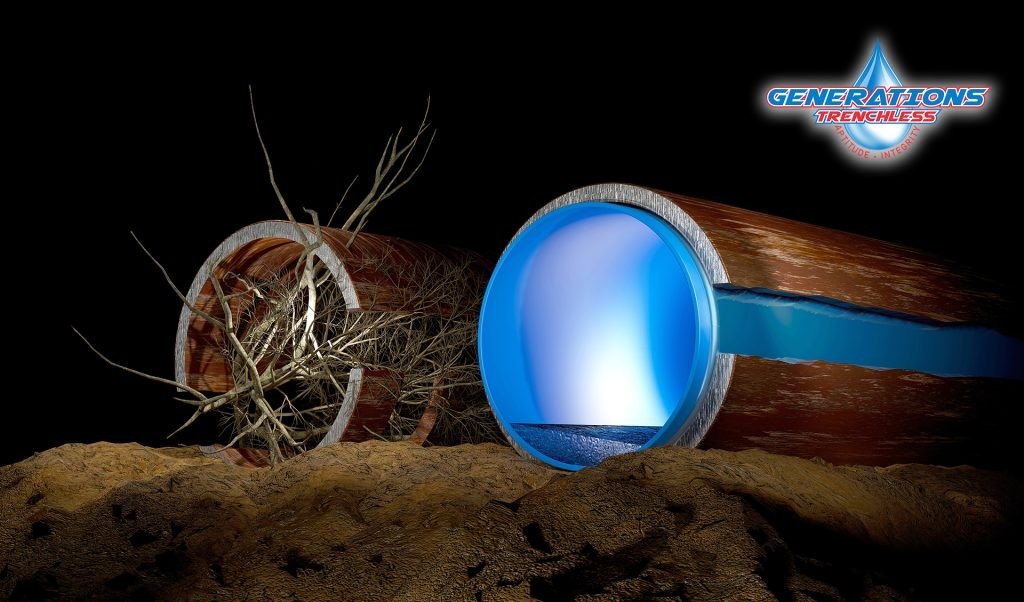
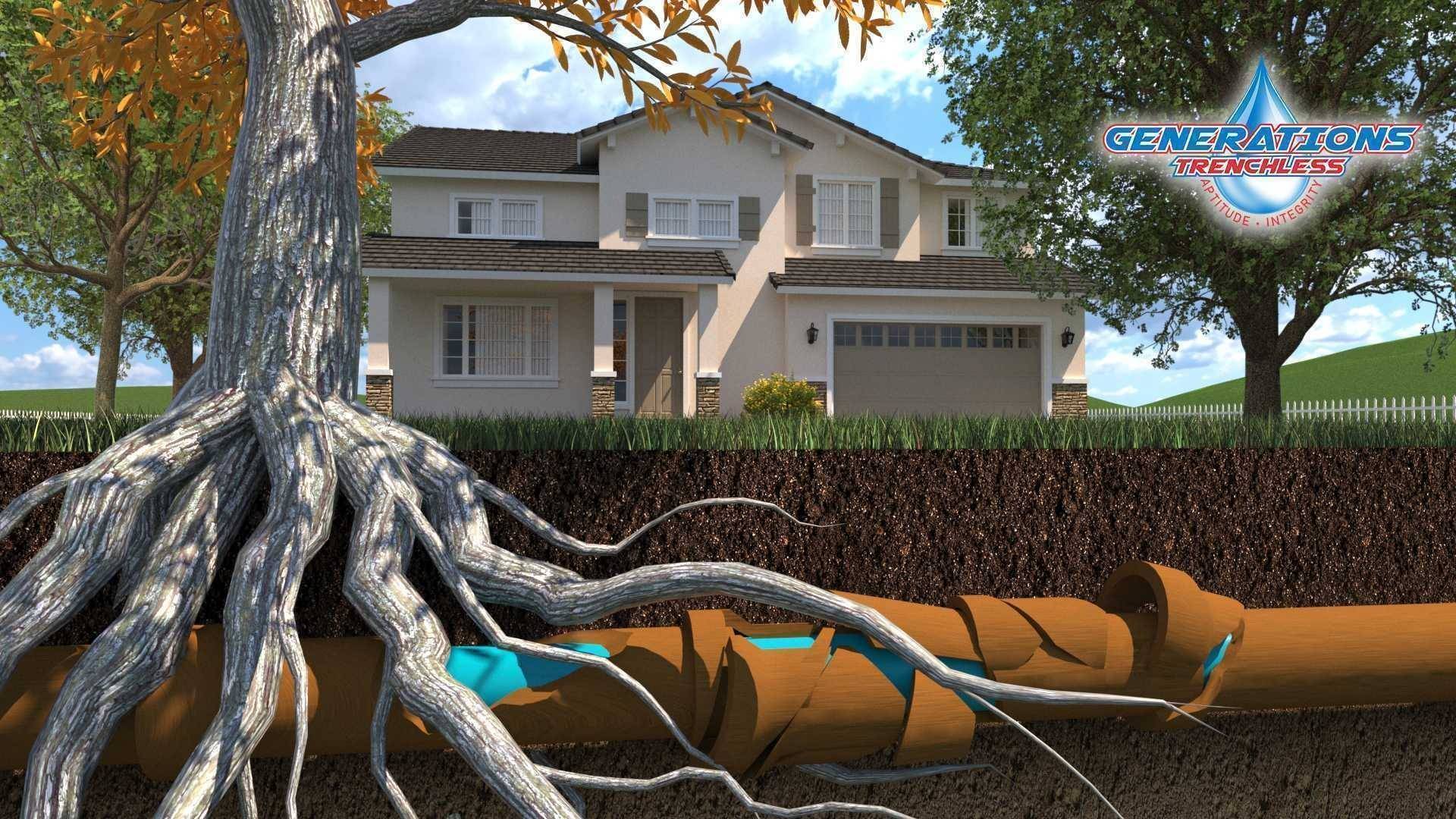
Tree roots find their way into sewer pipes through the smallest cracks and joint gaps, then expand inside the line, causing sewage backups and slow drains. Trenchless pipe repair clears the intrusion and replaces the damaged section with a seamless new pipe that resists future root intrusion.
2. Cracked, Fractured, or Corroded Pipes
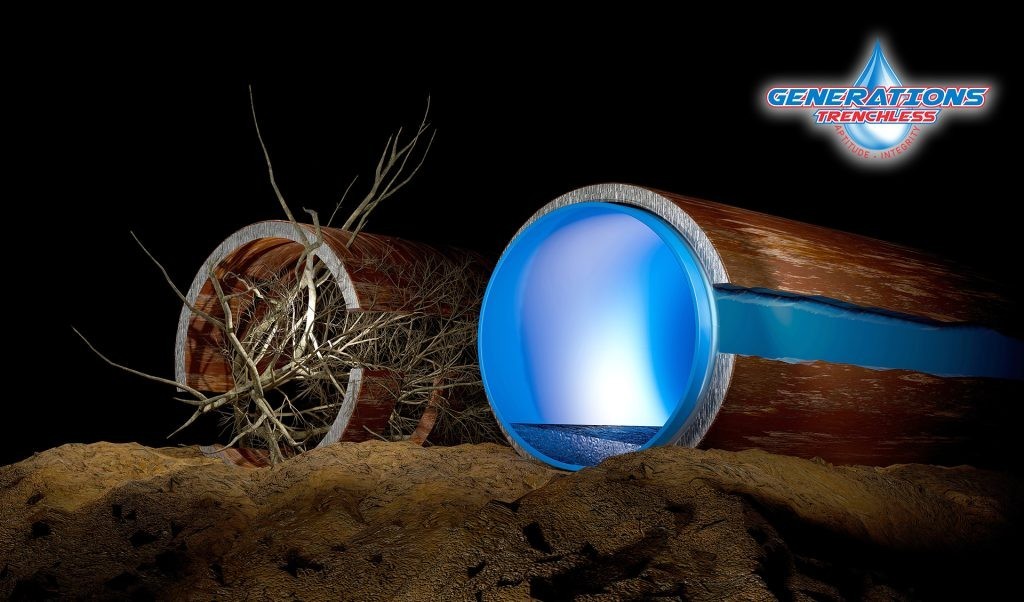
Older sewer pipes made of clay, cast iron, or Orangeburg deteriorate over time and develop cracks that allow wastewater to leak into the surrounding soil. Pipe lining restores the line’s structural integrity by creating a new pipe within the old one, without extensive excavation.
3. Bellied or Sagging Pipes and Joint Separation
Soil shifting and settling can cause sections of pipe to sag or pull apart at joints, trapping waste and reducing flow capacity throughout the plumbing system. Pipe bursting replaces the affected line with a continuous HDPE pipe, eliminating joint failures.
4. Partial or Full Pipe Collapse
A completely collapsed sewer line was once an automatic candidate for traditional digging, but modern trenchless methods now handle most collapse scenarios. Pipe bursting fractures the broken pipe outward and pulls a new pipe through the same path, restoring service without tearing up the yard.
How Pipe Lining (CIPP) Works

Cured-in-place pipe lining, or CIPP, is one of the most widely used trenchless repair methods for damaged but structurally sound sewer pipes. The process creates a new pipe inside the existing pipe without extensive excavation.
Inserting and Curing the Resin Liner
The repair starts with a thorough camera inspection to confirm the extent of the damage. A resin-saturated liner is then pulled through the sewer line and positioned against the inside walls of the old pipe. Hot water, steam, or UV light cures the resin in place, hardening the liner into a seamless new pipe.
Best Use Cases for CIPP Lining
Pipe lining is ideal when the existing pipe still holds its shape, and the damage is limited to cracks, root intrusion, or corrosion. A properly installed CIPP liner restores full flow capacity and lasts 50 years or more, making it one of the most durable trenchless repair options available.
How Pipe Bursting Works
Pipe bursting is the trenchless repair method of choice when the existing pipe is too damaged to support a CIPP liner. The technique replaces the entire line in a single pass, even when the old pipe has completely collapsed.
Fracturing the Old Pipe and Pulling the New Line Through
The crew opens two small access pits at either end of the damaged sewer line and feeds a steel cable through the existing pipe. A conical bursting head is attached to the cable, then pulled through using hydraulic equipment.
The bursting head fractures the old pipe outward into the surrounding soil while a new HDPE pipe is pulled into place behind it.
Handling Severely Damaged or Collapsed Sewer Lines
Pipe bursting handles severely damaged or completely collapsed sewer pipes that pipe lining cannot repair. The new high-density polyethylene pipe is seamless, root-resistant, and engineered to last 50 years or more.
The Trenchless Advantage Over Traditional Methods
Trenchless pipe repair changes the math on every part of a sewer repair project. Compared to traditional excavation, trenchless methods cut time, costs, and disruption while protecting your property and your wallet.
Trenchless vs. Traditional Pipe Repair
| Factor |
Traditional Dig-and-Replace |
Trenchless Pipe Repair |
| Project time |
3 to 7 days |
Hours to 1 day |
| Yard disruption |
Long trench across the property |
Two small access points |
| Restoration cost |
Often equals or exceeds repair cost |
Minimal to none |
| Driveway, patio, hardscape |
Often demolished and replaced |
Left undisturbed |
| Pipe lifespan |
50+ years |
50+ years |
The numbers favor trenchless in nearly every category that matters to a homeowner. The repair is done in a fraction of the time, the property stays intact, and the long-term durability matches or exceeds that of traditional digging.
Situations Where Trenchless Pipe Repair Excels

Trenchless pipe repair shines in situations where traditional digging causes the most damage and costs the most to recover from. The smaller the access points and the more valuable the surface above the line, the bigger the trenchless advantage:
- Pipes under driveways, patios, and structures. Trenchless repair preserves concrete, pavers, and foundations that traditional excavation would have to break apart and rebuild.
- Repairs beneath mature landscaping. Established trees, gardens, and irrigation systems stay in place when the work happens through small access points instead of a long trench.
- Limited-access areas and tight spaces. Side yards, sloped lots, and properties hemmed in by fences or other utilities are well suited to trenchless methods that need only a few feet of working room.
- Lines crossing property lines or public right-of-ways. Permitting and restoration costs drop dramatically when a sewer repair does not require tearing up a sidewalk, street, or neighbor’s yard.
These are the situations where the choice between traditional and trenchless will mean thousands of dollars in restoration and weeks of disruption.
The Inspection Process: Camera Technology
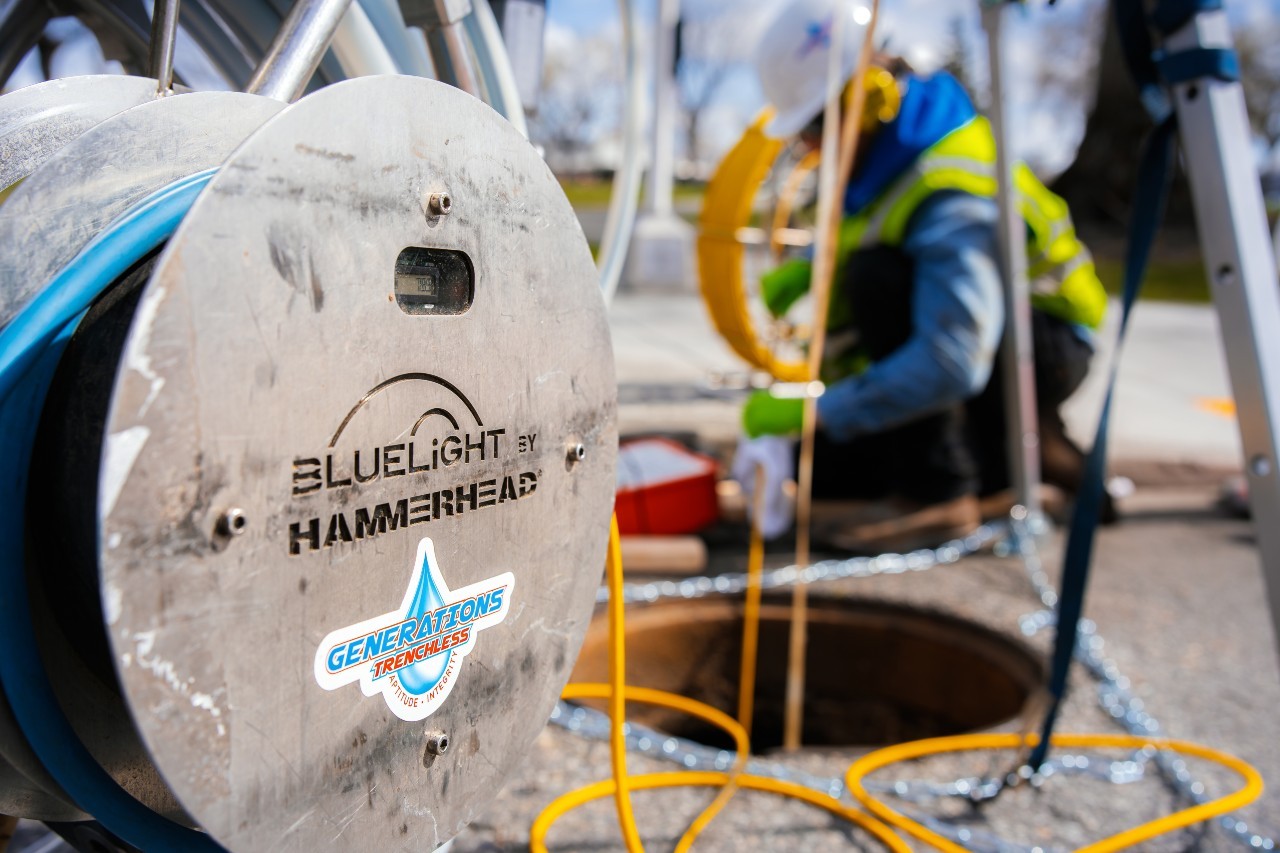
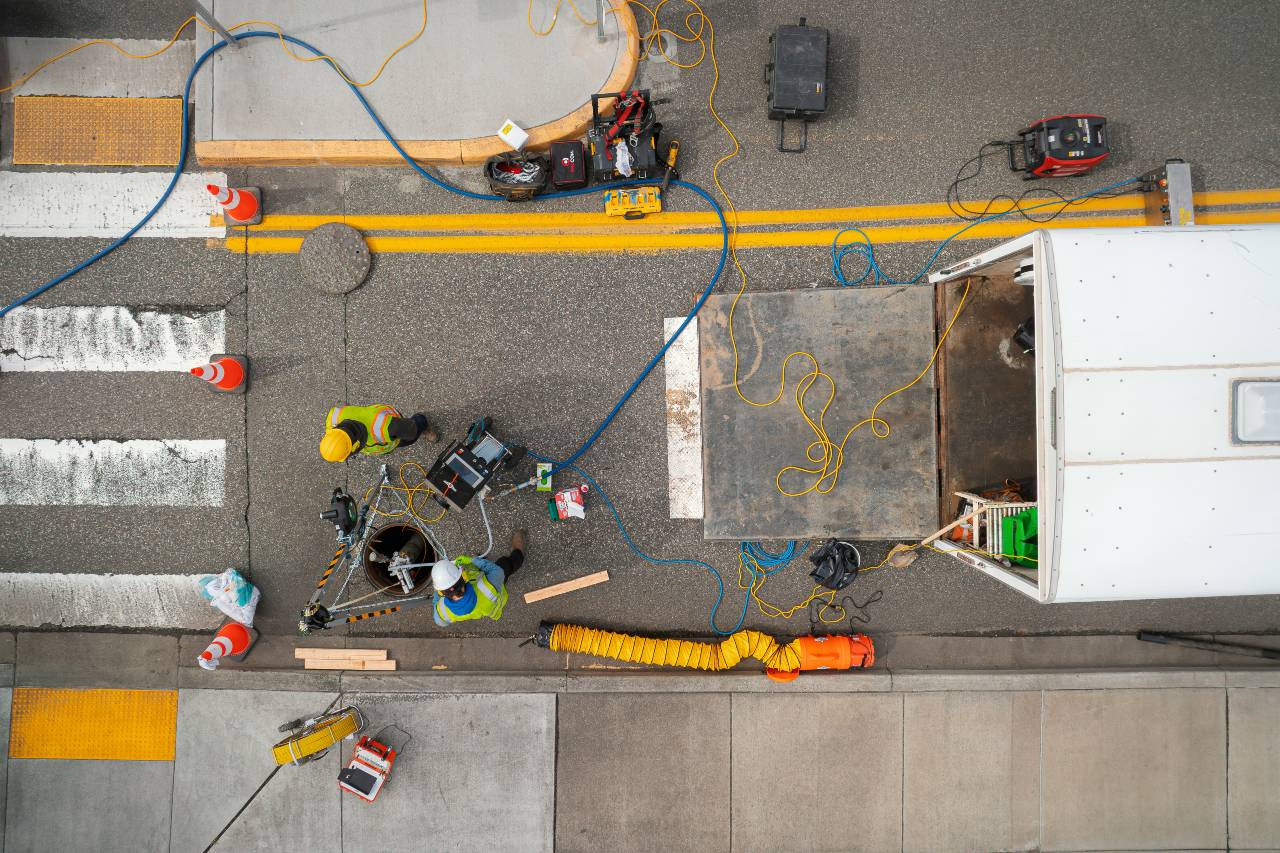
Every successful trenchless pipe repair starts with a clear picture of what is happening inside the line. A high-resolution sewer camera is fed through an access point and sent through the entire pipe, sending live video back to the technician on the surface.
The footage shows exactly where the damage is, what kind of damage it is, and whether the existing pipe is structurally sound enough for CIPP lining or requires pipe bursting.
Documenting the line before the repair also gives you a record of the pre-existing conditions and a clear comparison.
When Is Trenchless Not the Right Solution?
Trenchless pipe repair handles the vast majority of residential sewer line problems, but it is not the right answer in every situation. Some lines have damage patterns, alignment issues, or surrounding conditions that call for traditional excavation instead.
When Traditional Excavation Is the Better Choice
Trenchless may not be the right call when the existing pipe has severe bellies that need to be re-graded, when the line has shifted significantly out of alignment, or when soil conditions around the pipe make a controlled burst risky.
New service connections and some complete replacements also fall outside the scope of what trenchless may be able to handle.
Why an Honest Evaluation Matters
The right call comes from a thorough camera inspection and a straightforward conversation about the line’s condition. The right answer might be trenchless or traditional digging, but it should always be the option that solves the actual problem and protects the property in the long run.
Long-Term Benefits of Zero-Dig Trenchless Pipe Repair

Zero-dig trenchless pipe repair is built to last. The right materials, methods, and seamless construction deliver decades of reliable service that older sewer pipes cannot match, especially when an experienced trenchless professional does the work.
The long-term benefits include:
- A 50+ year lifespan. HDPE pipes and CIPP liners are engineered to outlast the original pipe by decades.
- Seamless pipes resistant to root intrusion. No exposed joints means nothing for tree roots to exploit.
- Improved flow capacity. Smooth interior walls often deliver better flow than the original pipe.
- Reduced risk of future repairs. A properly installed trenchless system rarely needs follow-up work.
- Warranty peace of mind. Long-term warranties protect property owners well beyond the initial repair.
These are the kinds of results that make trenchless pipe repair a true long-term investment in the structural integrity of your plumbing system.
Facing Sewer Line Problems? Discover the Trenchless Solution That Protects Your Property!
Don’t let traditional excavation destroy your beautiful yard or expensive driveway. Sewer line problems do not have to mean a destroyed landscape or restoration costs that rival the repair itself.
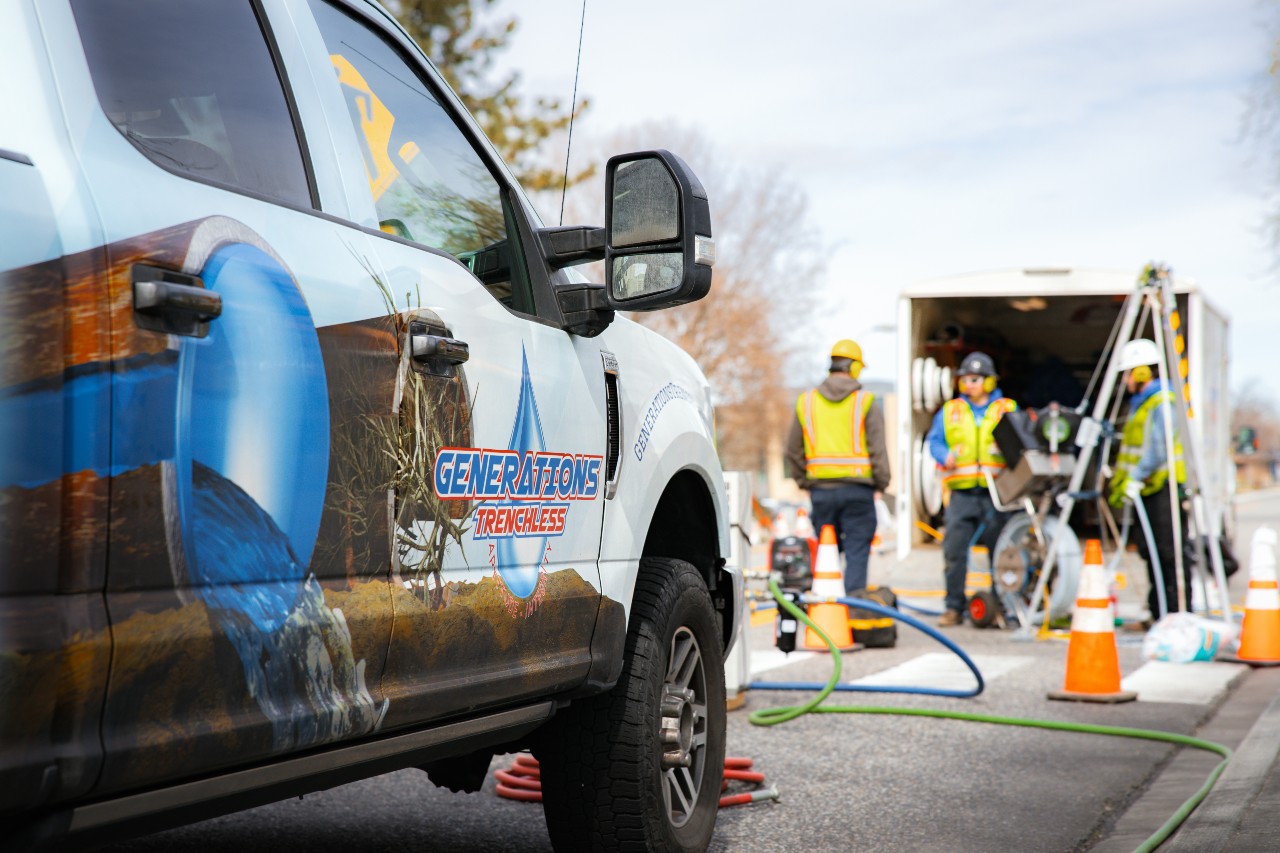
Contact Generations Trenchless and Plumbing today for a comprehensive video inspection and honest assessment. We’ll show you exactly what’s happening with your sewer line and explain whether trenchless pipe repair is the right solution for your situation.
Experience the zero-dig trenchless pipe repair difference, effective repairs that preserve your landscape, save you time and money, and come with the peace of mind you deserve. Call now to schedule your inspection!