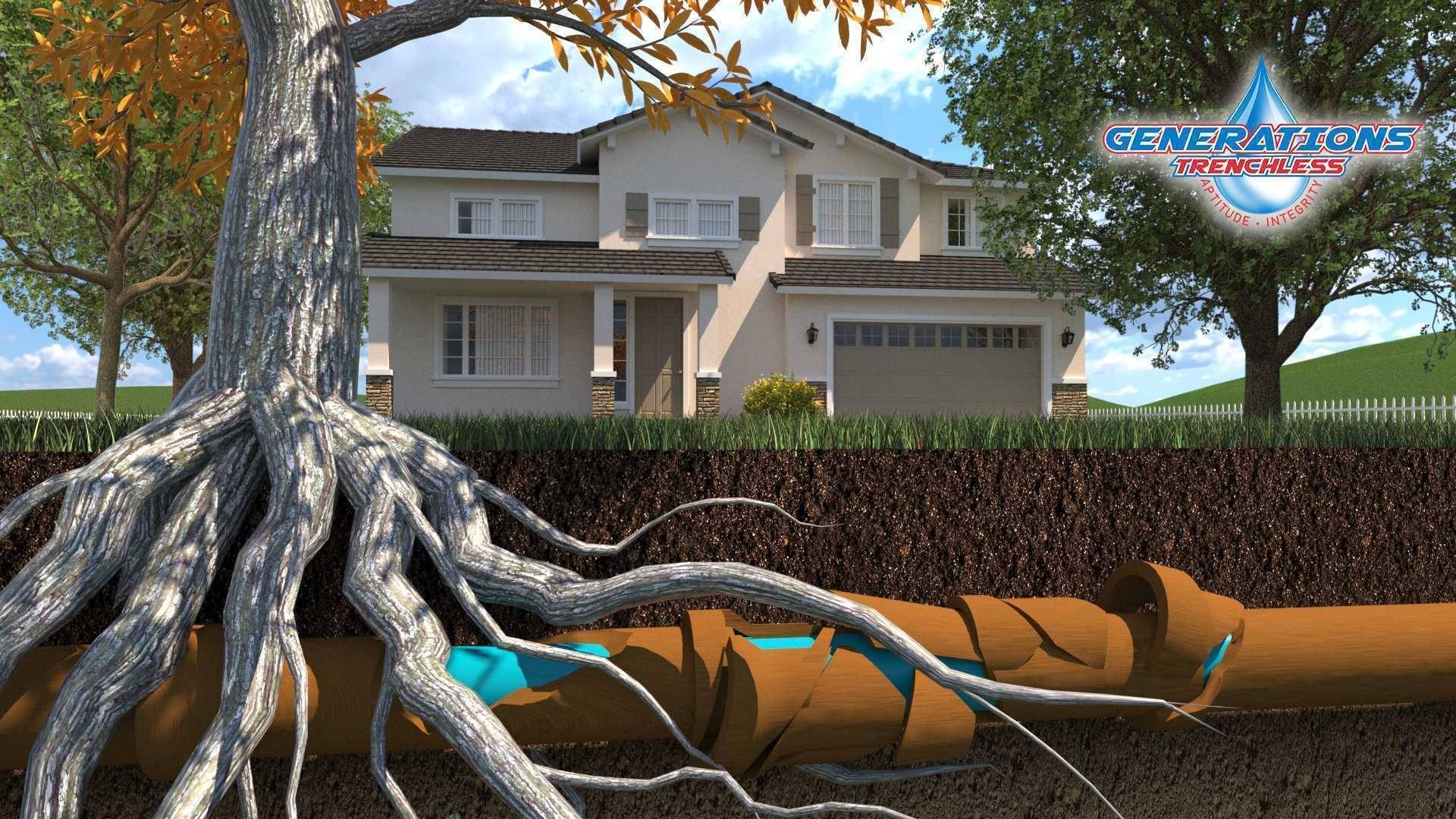
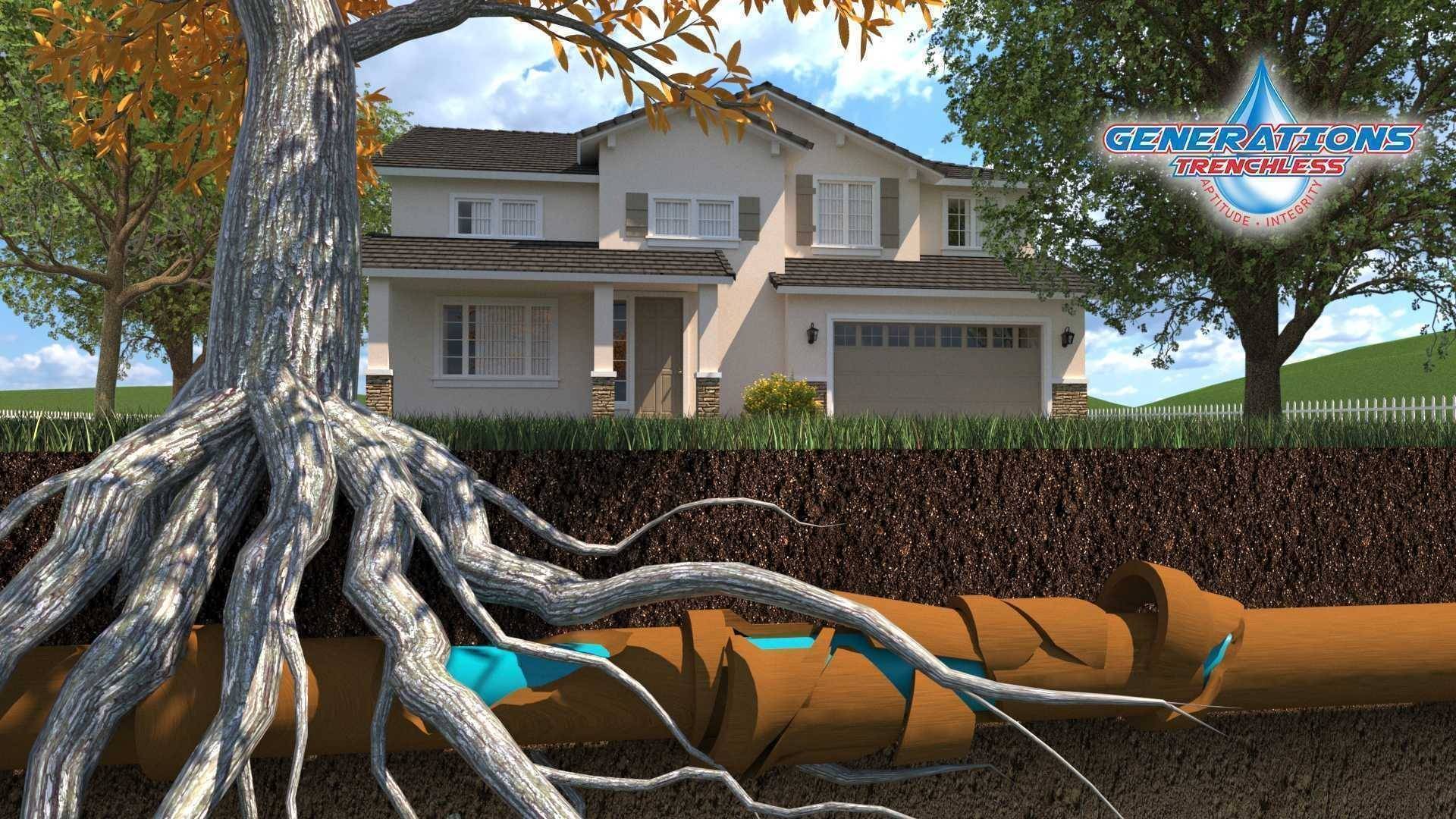
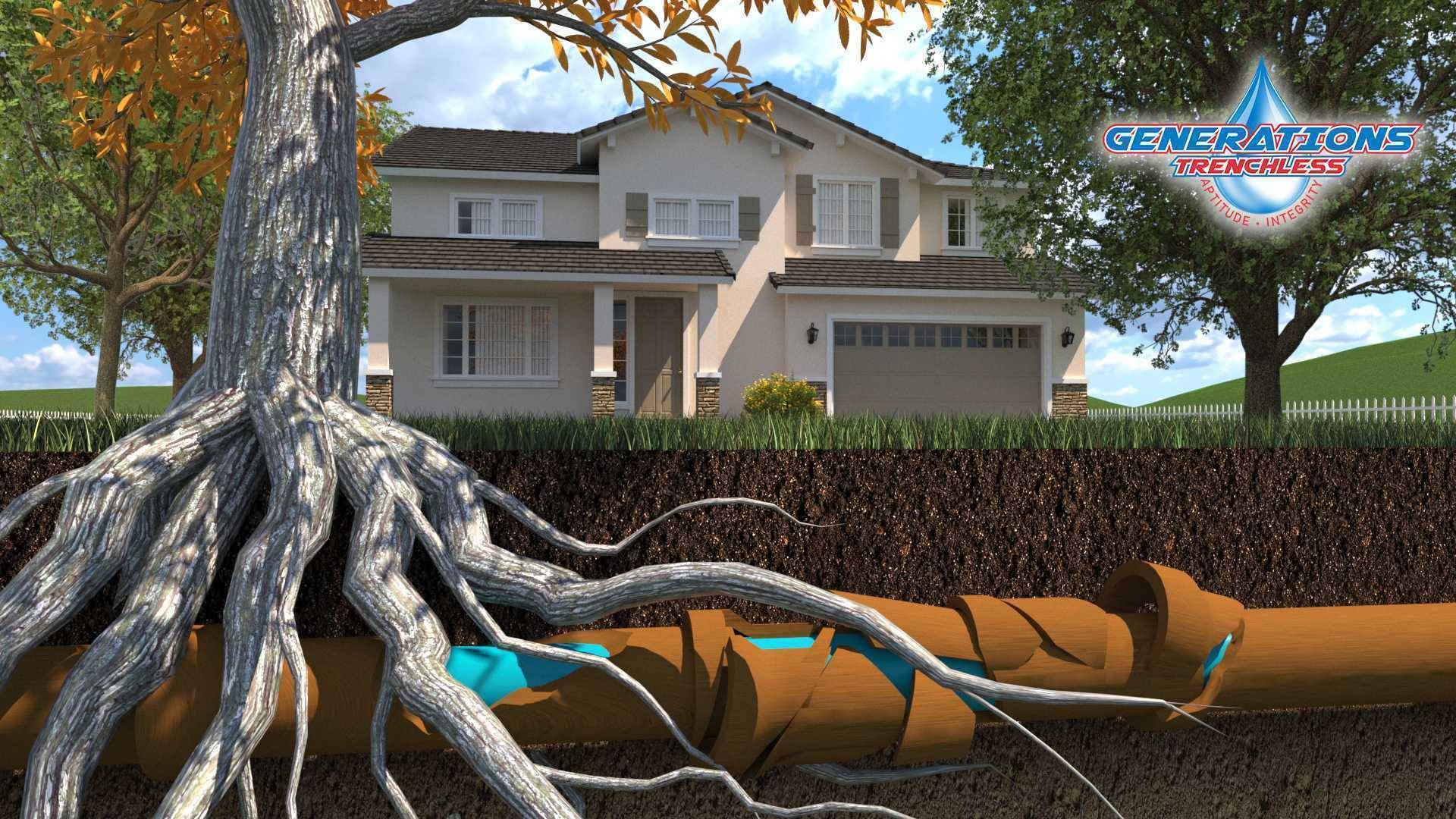
Your water bill jumped last month and you’re not sure why. Or the pressure in every faucet dropped at once. Maybe there’s a soft, soggy patch in the yard that wasn’t there last week. Something is off, and it’s underground, which means you can’t see it and you can’t ignore it.
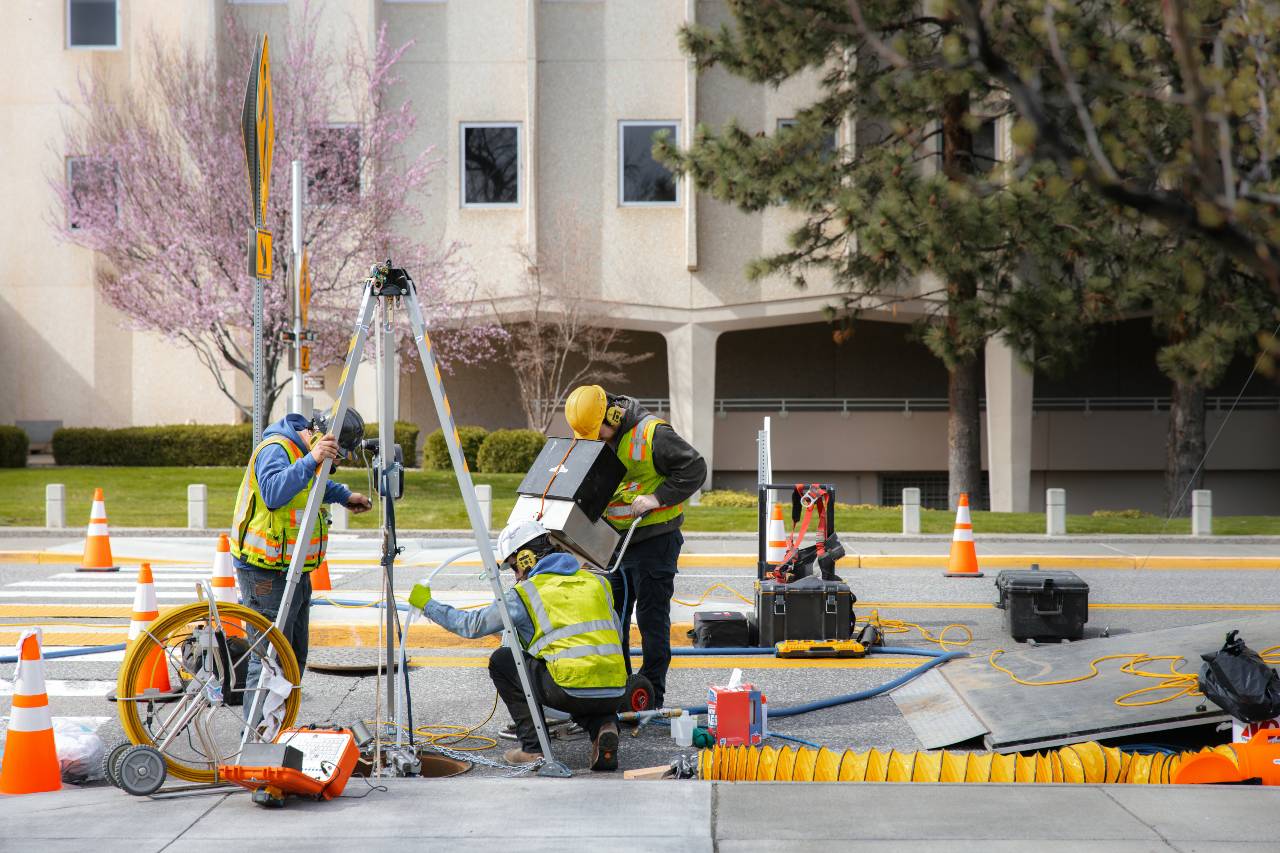
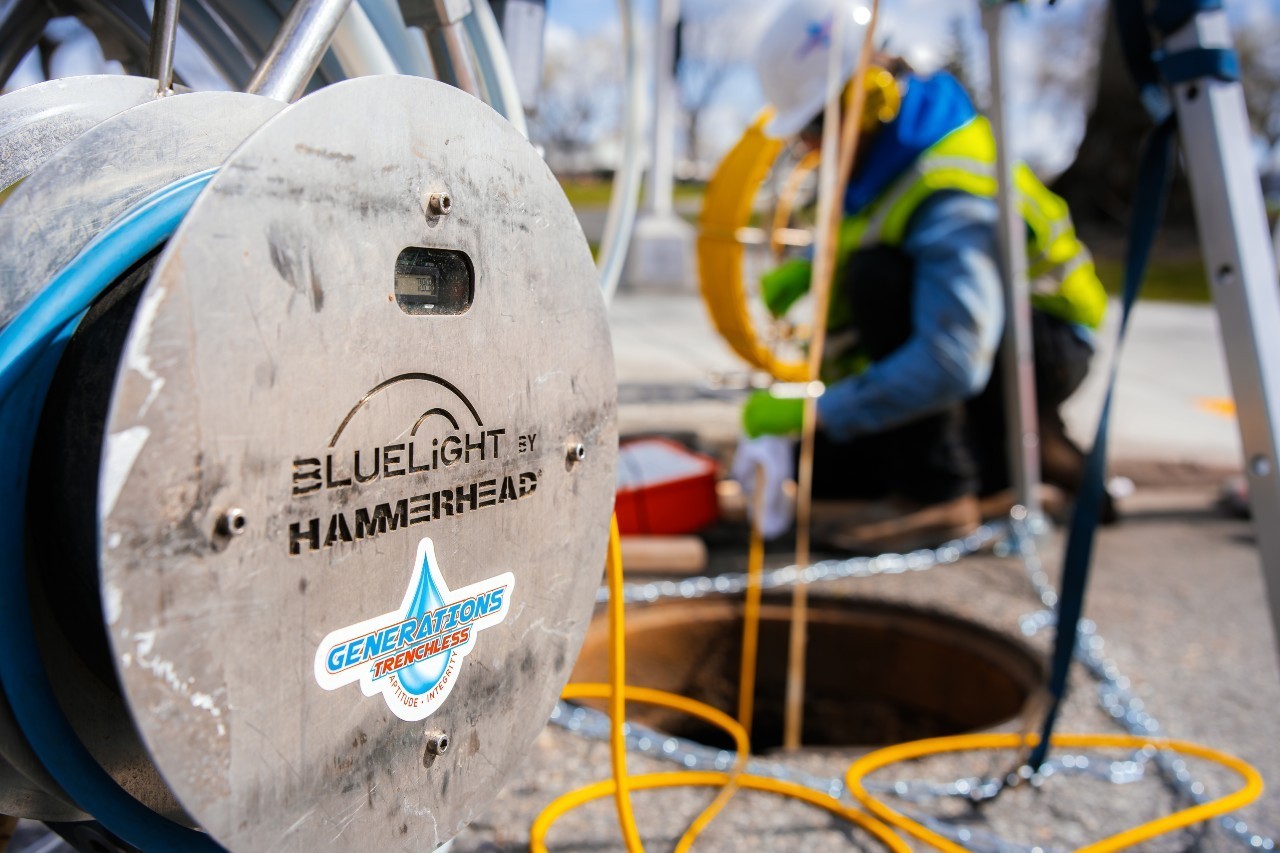
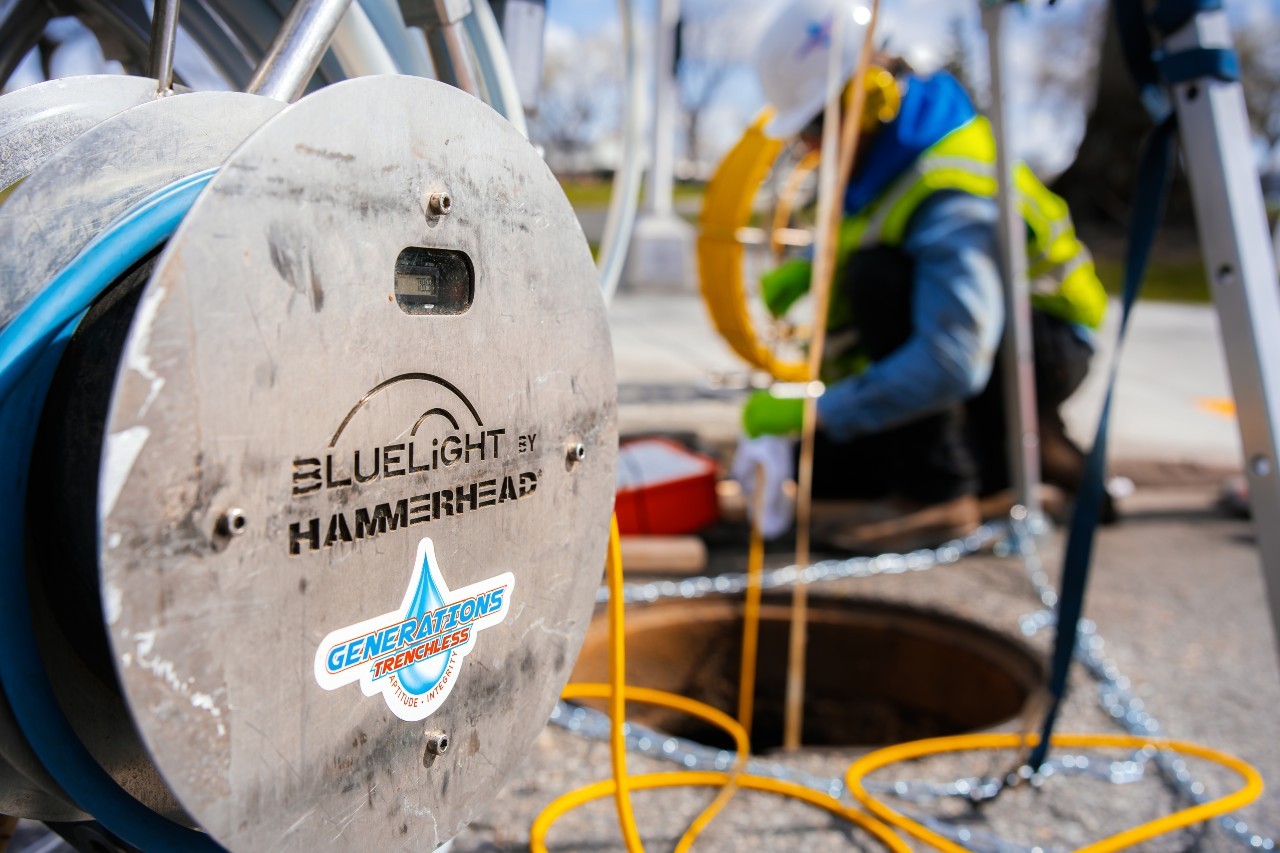
The good news: you don’t have to guess. A camera inspection tells you exactly what’s happening before anyone recommends a repair. That’s where every honest water service line repair conversation starts.
What a Water Service Line Is (and Why It’s Your Responsibility)
The water service line is the pipe that runs from the municipal meter or curb stop at the street to your home. The city owns and maintains the line up to the meter. Everything on your side of that meter is yours, including the cost of repairs if something goes wrong.
Four Signs the Line Is Telling You Something
These signals don’t always mean the service line is the problem, but they’re worth paying attention to.
Low pressure throughout the house. If every faucet and fixture is running weak at the same time, the issue is likely upstream of the house, not inside it. A single low-pressure fixture usually points somewhere else.
An unexplained spike in your water bill. A line that’s leaking underground keeps running water you’re not using. If your usage hasn’t changed but your bill has, that’s the line asking to be looked at.
Discolored or rusty water. Older galvanized or cast-iron lines corrode from the inside out. If the water running from your tap is brown or carries a metallic taste, the pipe itself may be breaking down.
Wet or unusually green patches in the yard. Tri-Cities summers are dry. A patch of grass that’s greener than everything around it, or ground that stays soft after the sprinklers have long since run, often means water is escaping underground.
Some of these signs have other explanations. That’s exactly why a camera inspection matters before any repair decision is made.
Why Trenchless Is Usually the Right Path
A trenchless water service line repair fixes or replaces the pipe without opening a trench across your property. The work happens underground, through two small access points at either end of the line. Your yard stays a yard. Your driveway stays a driveway.
That distinction matters more than it might sound. Traditional excavation digs a long trench across the property to reach the pipe. According to Angi, the base cost of trenched replacement does not include replanting grass, repairing sidewalks, or restoring your yard. Those are separate expenses on top of the repair itself. With trenchless methods, there’s almost nothing to restore.
The time difference is significant too. In our experience, traditional excavation typically takes 2 to 5 days; most trenchless repairs are completed in hours to one day.
The Two Methods: Pipe Lining and Pipe Bursting
Not every damaged line calls for the same fix. The camera inspection determines which method fits.
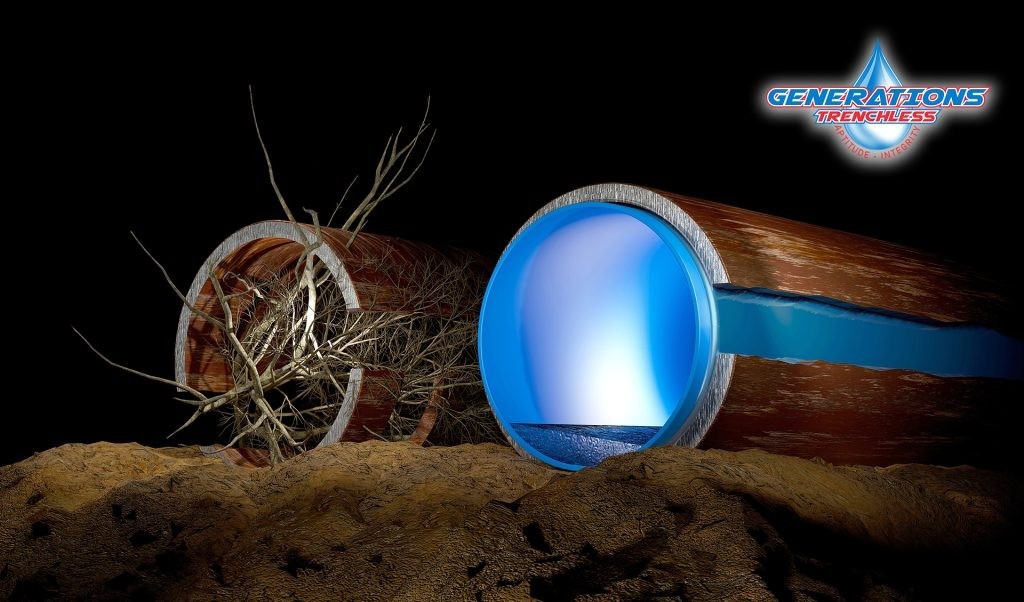
Pipe lining, also called CIPP (cured-in-place pipe), works when the existing pipe still holds its shape but is cracked, corroding, or leaking. A resin-saturated liner is pulled through the old pipe and cured in place, creating a new pipe inside the old one. No trench, no excavation, and a repair that’s built to last.
Pipe bursting is the right tool when the damage is more severe or the pipe has partially collapsed, as long as the alignment is still intact. A bursting head is pulled through the old pipe, fracturing it outward while simultaneously pulling a new pipe into place behind it.
Both methods work through those same small access points. Both carry a 10-year warranty when completed by Generations Trenchless and Plumbing.
There is an honest limit worth naming: if a line has collapsed and shifted out of alignment, neither method is viable. In nearly every case, contractors attempt trenchless first, but when the pipe’s position makes that impossible, traditional excavation is the correct answer. A camera inspection tells you which situation you’re in before any work begins.
How Generations Approaches the Job
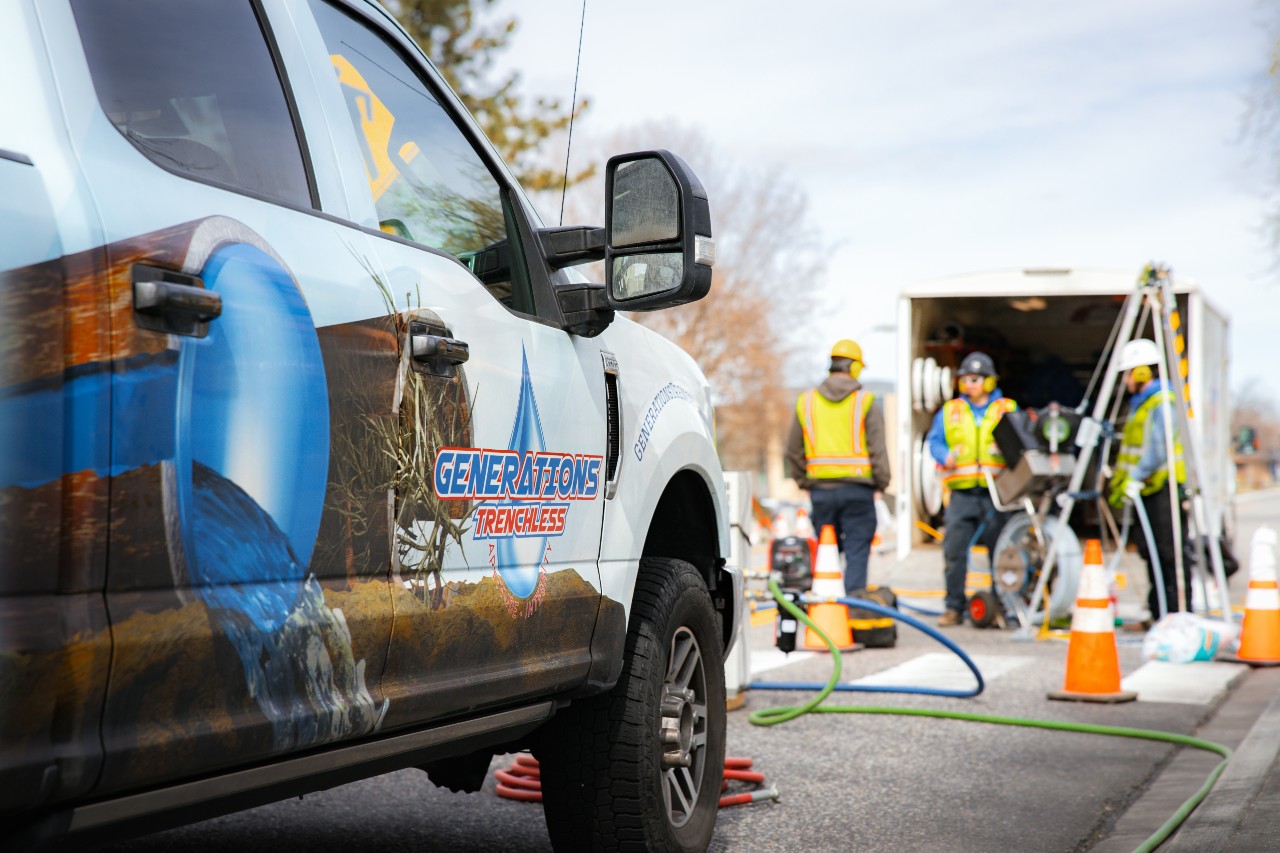
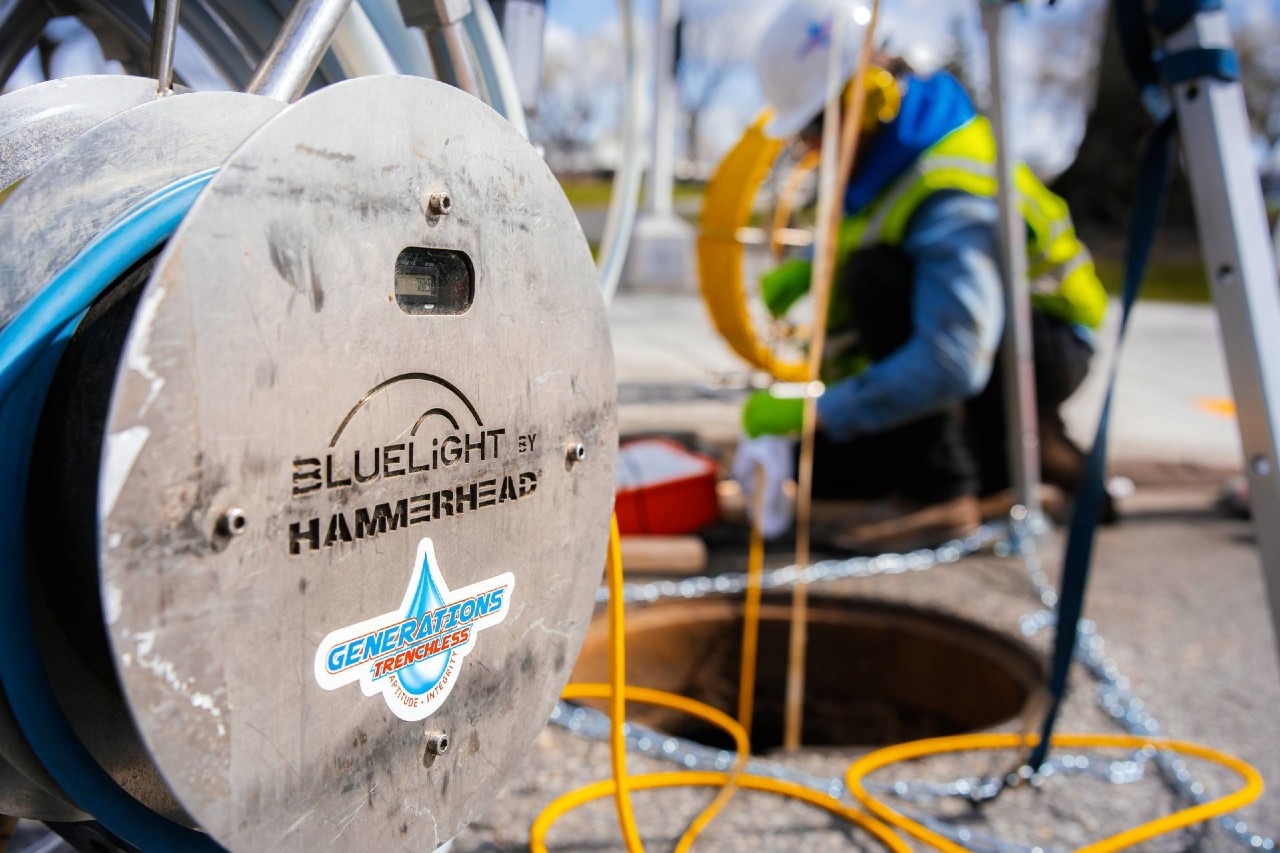
Thomas Tharet is a journeyman plumber with more than 15 years in the trade. Every water service line repair starts the same way: a camera goes in the line first. The diagnosis comes from what the camera shows, not from a guess or a worst-case assumption.
Once the inspection is done, you get the full price in writing before any work starts. No surprises on the invoice. Estimates are free in the Tri-Cities, and the trenchless repair comes with a 10-year warranty.
The goal isn’t to sell the most work. It’s to recommend the right repair for what the camera actually found.
Get Your Free Estimate
If you’ve noticed low pressure, a climbing water bill, or a wet patch in the yard that doesn’t make sense, a camera inspection is the right next step. Contact Generations Trenchless and Plumbing to schedule yours and get a written quote before any work begins. Estimates are free in Richland, Kennewick, Pasco, and the surrounding Tri-Cities area. Get your free estimate today!